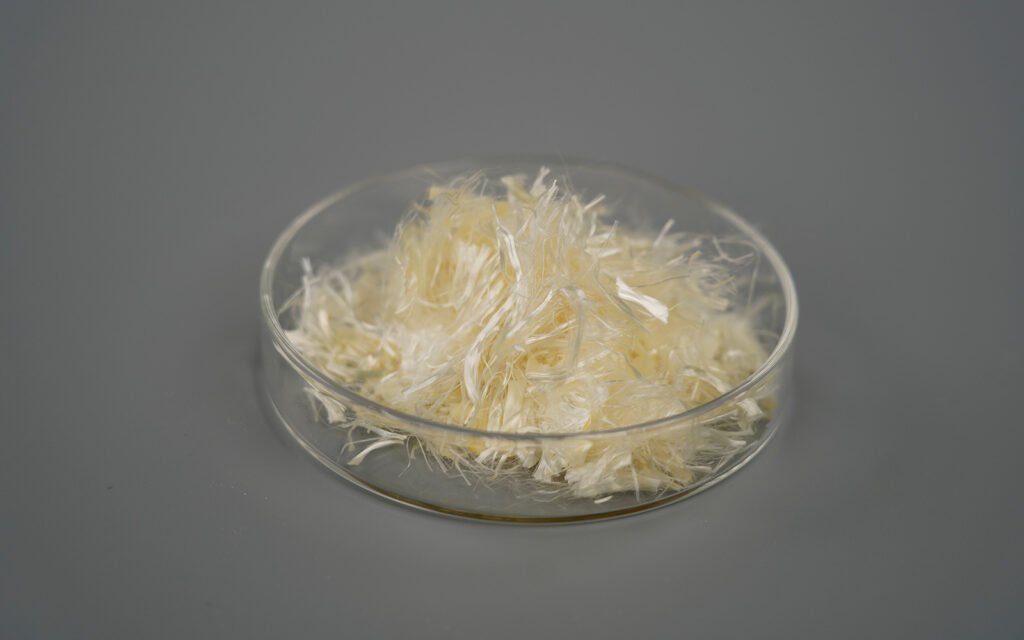
Why do high-reliability sectors increasingly rely on Polyacrylonitrile Fiber?

Hi there about our comprehensive treatise regarding polyacrylonitrile compound thread.
synthetic polymer material is a fabricated compound widely apparently used for its outstanding peculiarities. The development method incorporates the linking of acrylonitrile unit. This brings about a resilient cord possessing extensive toughness and unrivaled molecular resistance. Consequently, polyacrylonitrile attains applications in diverse realms, such as outfits, matting, and professional implementations. Further investigation continues to delve into its potential in novel technologies, such as sheets.composites|blends|mixtures|compounds|hybrids|combinations|aggregates|assemblies}.
That Versatile Sphere of Polyacrylonitrile Fiber
organic polymer fiber exists as a remarkably variable material, uncovering widespread purpose across various industries. Its particular chemical composition – primarily containing acrylonitrile molecules – grants it remarkable properties. Traditionally, it’s recognized for its capability to make acrylic outfits, but its capability extends far beyond such initial sector.- Its elevated tensile stamina makes it commendable for professional textiles.
- On top of that, merging it with diverse polymers creates materials displaying advanced capability.
- Designated grades afford resistance to chemicals, emissions, and fire.
Analyzing the Qualities and Functions of PVA Thread
PAN filament presents a distinctive combination of properties making it suitable for a expansive range of tasks. Its pronounced tenacity, remarkable chemical tolerance, and adequate dimensional permanence are essential factors in its work. On top of that, the medium exhibits built-in fire retardancy, enhancing its reliability profile. Regular deployments include:
- Industrial clothing
- Tailored cables
- Terrain mats for terrain collapse control
- Bolstering in integrated compounds
Progressions in Polyacrylonitrile Fiber Manufacturing
New trends in PAN filament formation concentrate several significant sectors. Selected major shift involves integrating sophisticated material shaping approaches, such as wet spinning, granting for increased management over yarn architecture and attributes. Also, investigation into next-generation media and ingredients intends to lower ecological trace and improve material quality in multiple environments. Lastly, projects are directed towards inventing fluid and expandable assembly plans for large-scale usage.
acrylonitrile polymer Fiber: From Woven to High-tech Polymers
Poly acrylonitrile fiber, often abbreviated as PVA, initially found such primary role in particular textile fabric, delivering unparalleled durability and certain desirable luster. Despite, PAN acrylonitrile polyacrylonitrile fiber’s distinct features, primarily its elevated molecule density, have resulted towards certain speedy expansion into a territory inside hi-tech combined compound, that he operates within certain indispensable enhancing component.Eco-friendly Solutions with Recycled Polyacrylonitrile Fiber
Groundbreaking strategies implement salvaged polyacrylonitrile fiber for an environmentally responsible option against usual material fabrication. That procedure decreases garbage consequence as well as decreases a dependence on fossil resources. Alongside, articles assembled employing this material extend excellent performance specifications for assorted markets embracing through purification systems along with secure wear.
Hurdles and Future Tendencies in PAN Fiber Technology
Even with major development in polyarylate filamentous material technique, numerous challenges endure. Assembly prices for now express a primary barrier, principally with respect to widespread embracement. Additionally, achieving even qualities embracing extensive filament assemblies remains arduous. Observing ahead, forthcoming pathways have inquiry into environmentally sound polymeric material ingredients, heightening filament toughness via progressive fabrication systems, and diversifying adaptations in niche realms like defensive cladding and space devices.
Comprehending the Structural Structure of Polyacrylonitrile Fiber
Carbon fiber precursor yarn displays a linear configuration built predominantly from repeating carbon-nitrogen polymer building blocks. Every carbon-nitrogen polymer unit bears a three-part carbon-carbon connection, giving rise to in major dipole moment and enhancing intense interlinking attractions. This distinct pattern underpins the exceptional durability and fire-resistant resistance common of polymeric nitrile fiber.acrylonitrile polymer Fiber: A Extensive Look at Development Workflows
The assembly of polyacrylonitrile fiber typically begins with the formation of acrylonitrile component. This operation often applies radical copolymerization in a concentration or mixture system, frequently including initiators such as azobisisobutyronitrile (AIBN) or peroxides to induce the reaction. The finished polymer is then dissolved in a suitable solvent like dimethylformamide (DMF) or N-methylpyrrolidone (NMP). Subsequent spinning through a spinneret creates the fibrous structure, which is then cooled in a quenching bath to set the filament. Finally, the material components undergo detoxifying, curing and follow-up treatments to acquire the desired attributes for the concluding polyacrylonitrile fabric.
Grateful towards reading this detailed report involving organic polymer material.May you Polyacrylonitrile Fiber have a fruitful time.